Chimney Repairs Terenure
Heritage Masonry, Lime Repointing & Lead Flashings
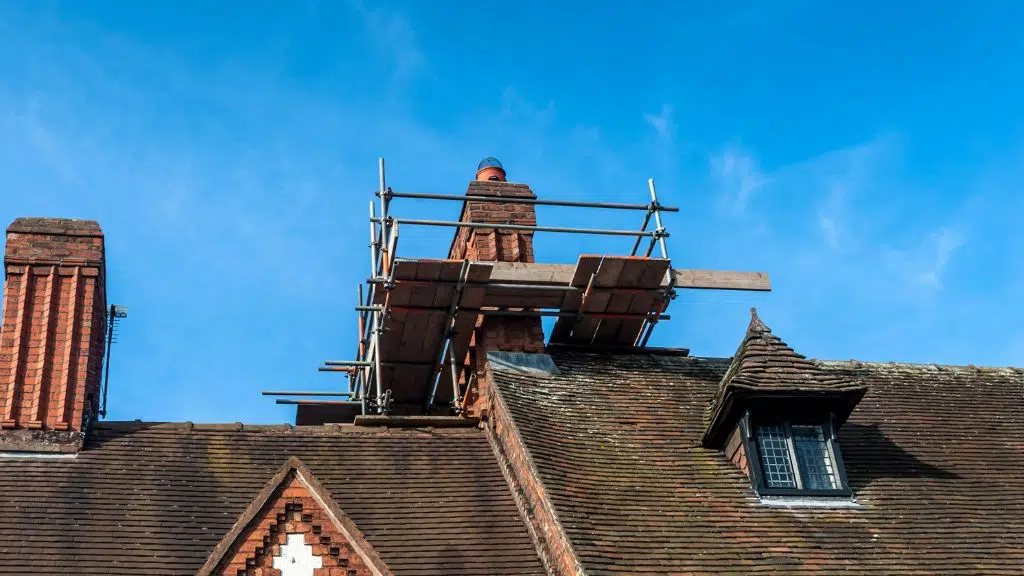
The roofline of Terenure is framed by distinctive chimney stacks. You see them everywhere: tall, corbelled red-brick structures rising above the slate roofs of Terenure Road North, Brighton Road, and Eaton Square, as well as the paired party-wall chimneys defining the 1930s suburban avenues of Greenlea Road, Whitehall Road, and Fortfield.
Because these masonry structures sit at the absolute highest point of your roof, they absorb severe weather. Prevailing winds blowing across the open expanses of the Dublin Mountains and the Irish Sea drive rain directly into the mortar joints, while seasonal freeze-thaw cycles break down aged concrete crowns.
When chimney weatherproofing fails in Terenure, water rarely stays confined to the attic. It tracks downward through internal brickwork flues, bleeding soot minerals into bedroom plasterboard, staining chimney breasts, and softening ceiling timbers.
At AD Roofing, Augustine Doherty and our team specialize in traditional chimney repairs, lime repointing, lead replacement, and structural stack rebuilds across Dublin 6W. We deliver permanent trade repairs that protect your home without ruining historic masonry.
Why Modern Cement Repointing Destroys Terenure Stacks
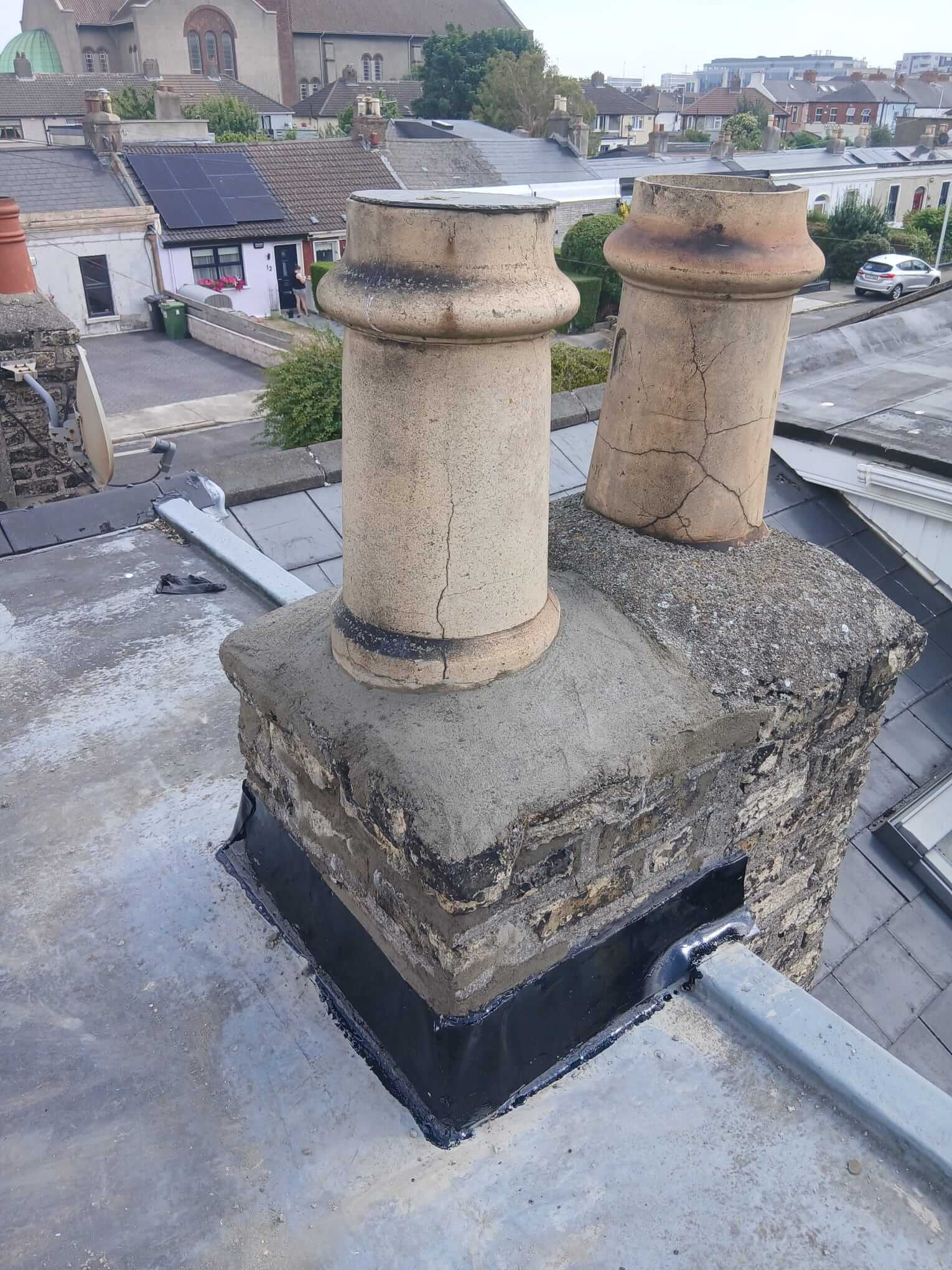
One of the most destructive problems we find on chimneys throughout Terenure is the use of hard, modern Portland cement mortar on period brickwork.
Late Victorian and Edwardian chimneys in Terenure were built with relatively soft, porous red clay bricks (frequently local Dolphin’s Barn or Portlaoise brick) bedded in flexible, breathable lime-and-sand mortar. This lime mortar allowed moisture absorbed during storms to evaporate naturally through the joints.
When an inexperienced contractor repoints an older stack with a stiff, impermeable cement mix, moisture gets trapped inside the brickwork with no way to escape. In winter, this trapped water freezes, expands, and forces the outer face of the historic bricks to shear off entirely—a process known as spalling.
At AD Roofing, we understand historic masonry. When working on older Terenure properties, we rake out failing joints and repoint using breathable hydraulic lime mortars that match the porosity, colour, and mechanical flexibility of the original structure.
What Dublin Says About Our Service


A Leak Never Fixes Itself—The Longer It Sits, the More It Costs

4 Common Chimney Issues in Terenure Properties
From 1890s terraces to 1950s infill homes, chimney problems in Terenure follow clear physical patterns:
1. Shared Party-Wall Chimney Leaks on 1930s Semis (Greenlea, Rathdown, Fortfield)
The vast majority of semi-detached homes across Terenure share a central chimney stack with their adjoining neighbour. The builder-grade lead flashings installed decades ago have often thinned, cracked along fold lines, or pulled out of the brick mortar joints. Water slips beneath the slates on the ridge, tracking down the shared wall and causing damp stains in upstairs bedrooms on both sides of the boundary.
2. Cracked Top Flaunching & Loose Chimney Pots
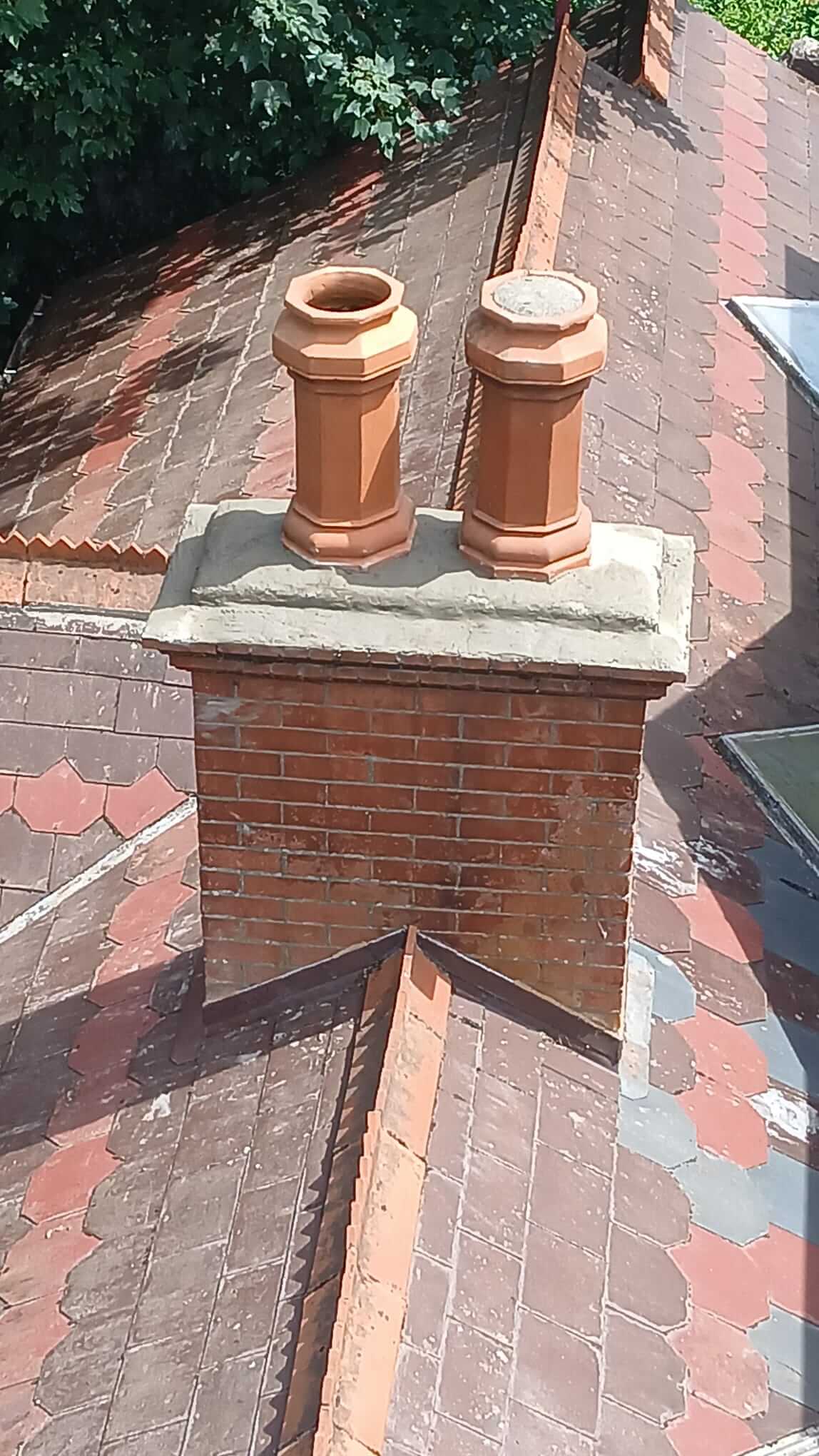
The flaunching—the sloping cement bed at the very top of the stack holding the terracotta pots—takes direct punishment from driving rain and winter frost. Hairline fractures quickly develop into deep cracks. Trapped ice splits the bed, causing ornate yellow-buff pots to wobble in high winds and posing a hazard to cars, extensions, and slate pitches below.
3. Split Lead Back Gutters Behind Large Stacks
Where a wide chimney stack sits across the roof pitch, water running down the slates meets a lead back gutter designed to channel rain around the masonry. When aged lead splits from thermal movement, large volumes of rainwater dump directly onto the ceiling joists below every time it rains.
4. Acidic Soot Leaching on Converted or Unused Stacks
Many Terenure homeowners have blocked up open fireplaces or installed high-efficiency wood burners. Without continuous heat rising to keep the flue dry, cold rain entering an uncapped chimney mixes with legacy soot deposits inside the masonry core. The resulting acidic moisture seeps through internal plaster, leaving stubborn brown rings that regular emulsion paint cannot cover.
Specialist Chimney Work Carried Out by AD Roofing
We do not use temporary roof coatings or silicone mastic that wash out after six months. We carry out trade-tested repairs:
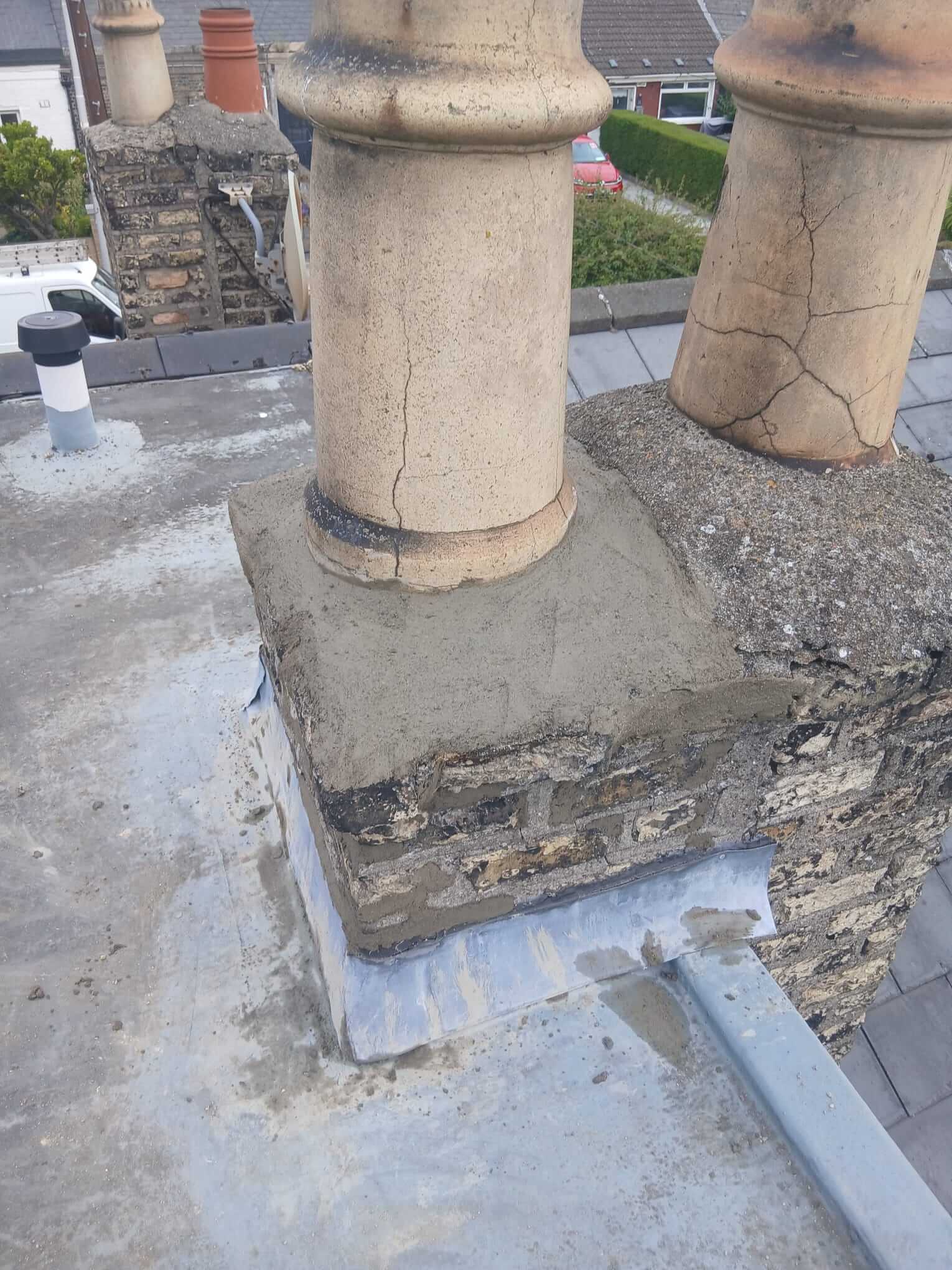
Traditional Breathable Lime Mortar Repointing: We rake out decayed joints to a depth of at least 15–20mm across all faces of the stack, flushing the brickwork before repointing with appropriate lime mortar formulations that allow the masonry to breathe.
Code 4 & Code 5 Milled Sheet Leadwork: We strip out cracked lead and hand-dress new heavy-gauge milled lead aprons, step flashings, soakers, and back gutters. Every piece is secured deep into the brick joints with lead wedges and pointed with dedicated high-performance lead sealants.
Flaunching Replacement & Pot Re-Bedding: We chip away fractured concrete crowns, lay down a fresh, waterproof concrete flaunching bed pitched to shed rainwater rapidly, and securely reset existing or replacement terracotta pots.
Fitting Aerodynamic Rain & Bird Cowls: We install stainless-steel or heavy terracotta anti-downdraught cowls that prevent driving rain from pouring down the flue while maintaining essential passive airflow to keep the chimney core dry.
Stack Lowering, Removal & Rebuilds: If a stack is leaning, severely fractured, or completely redundant, we can safely dismantle the brickwork course by course. If you want the stack removed, we take it down below the rafters, frame across the opening with treated structural timber, fit breathable underlay, and slate over the opening seamlessly.
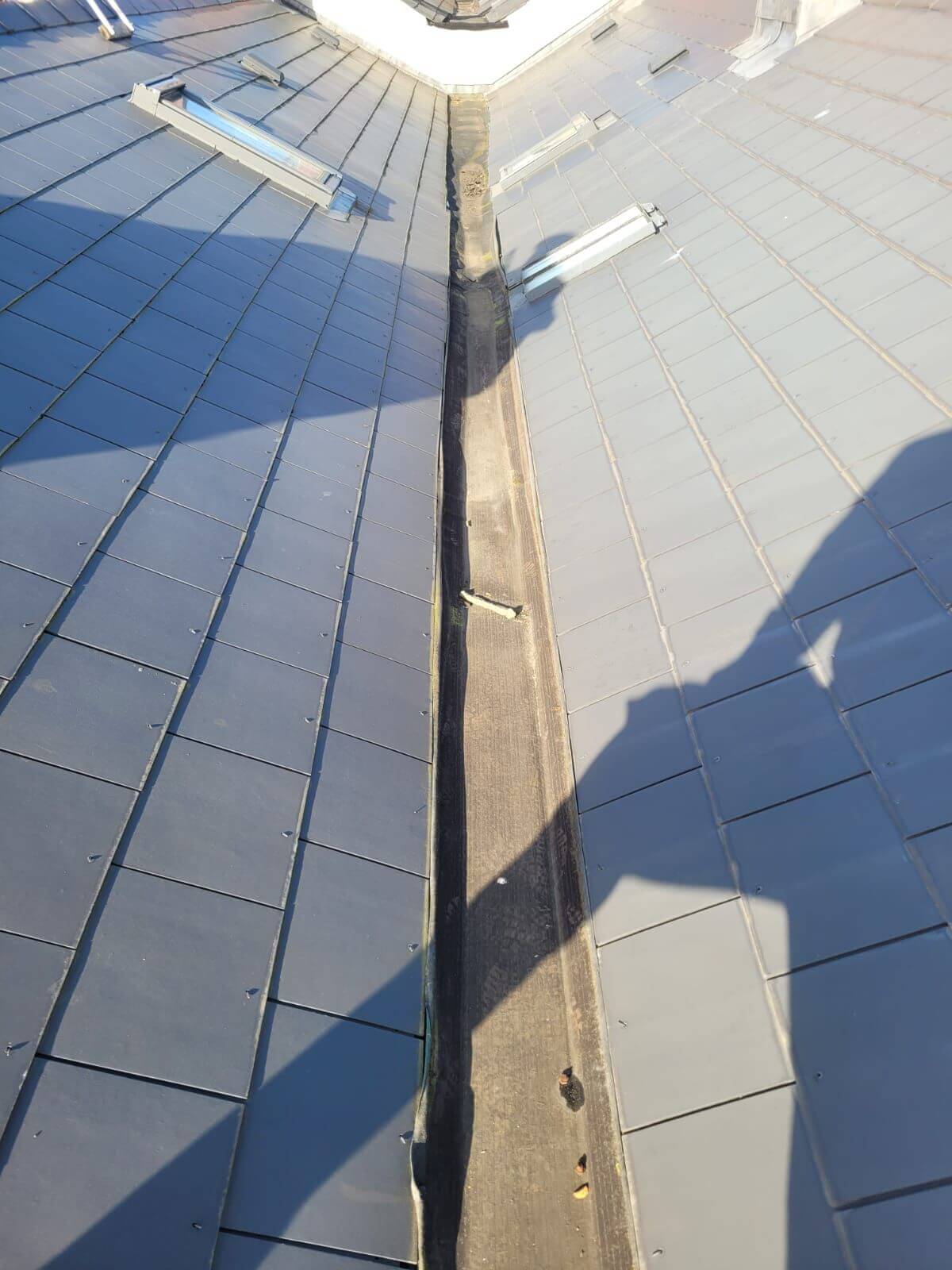
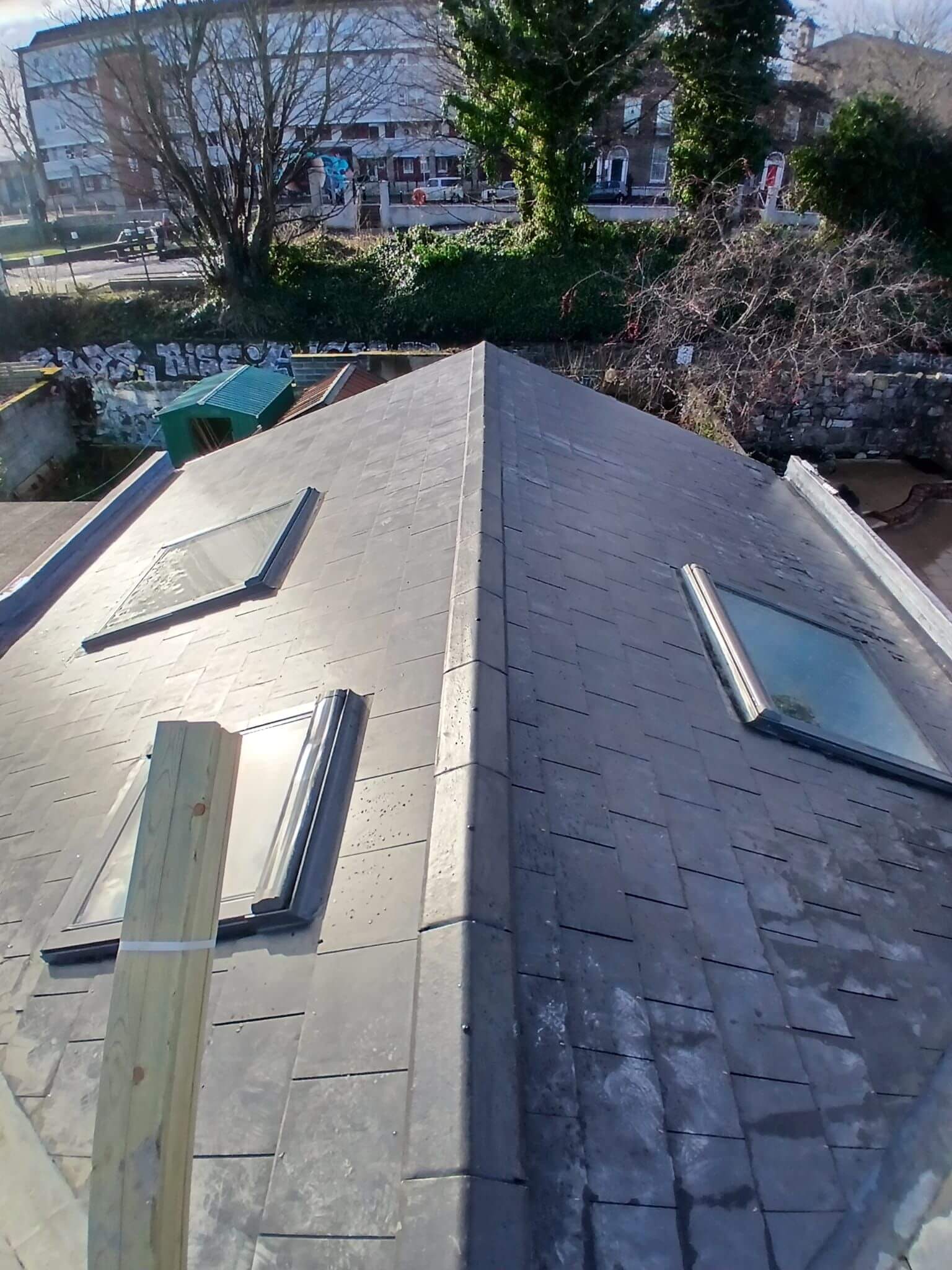
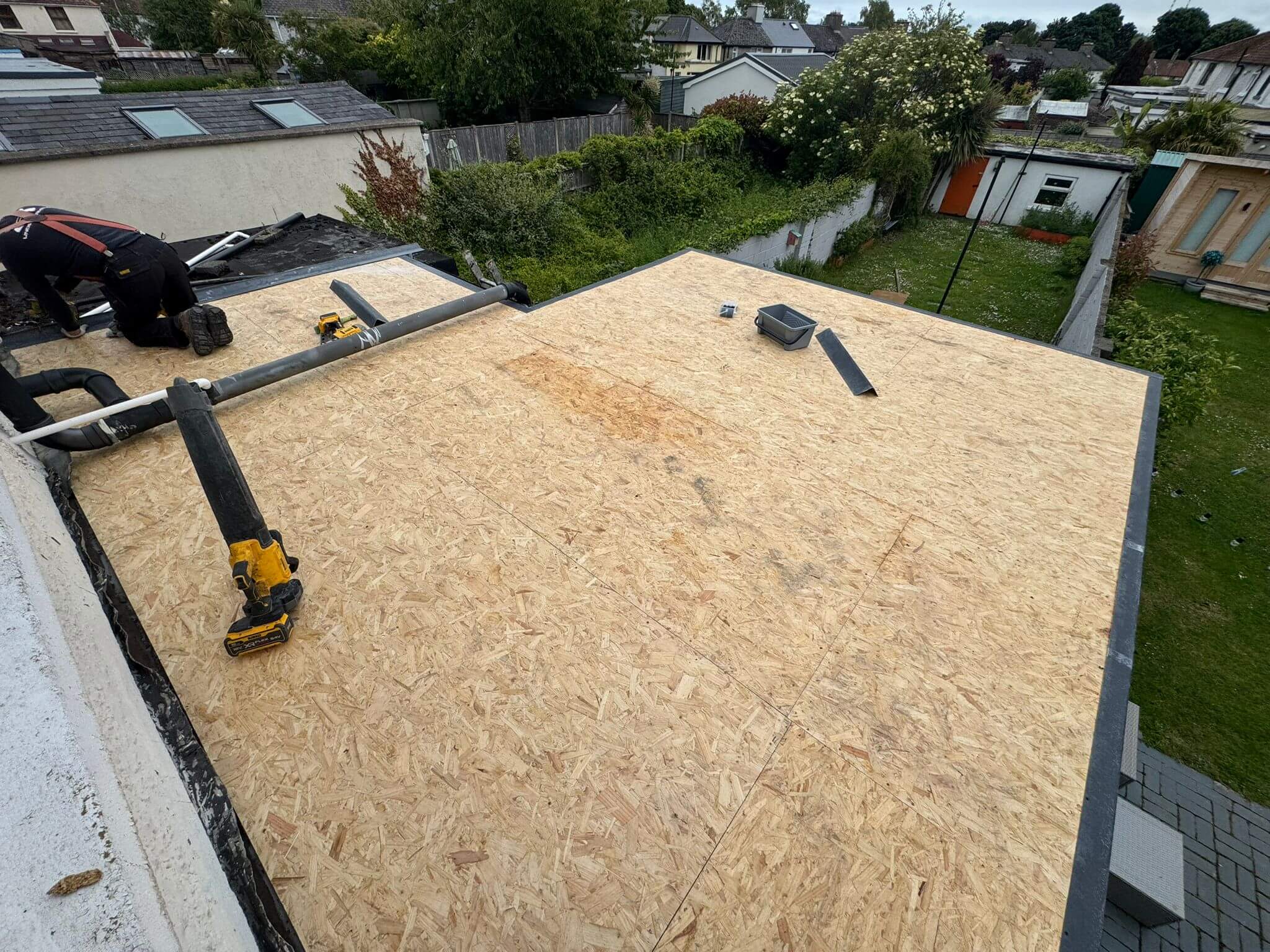
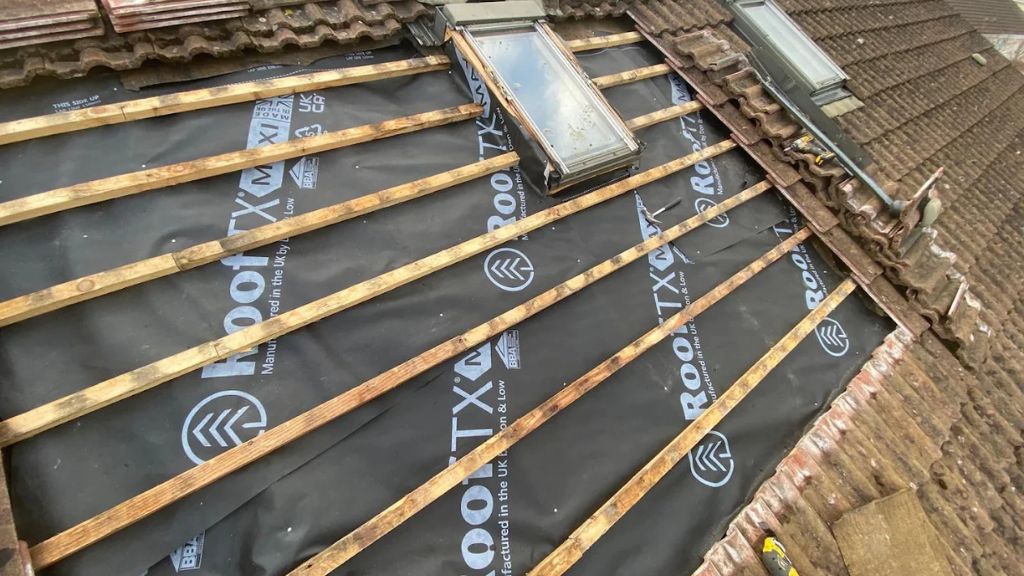
Photos Of Our Recent Roofing Jobs
Frequently Asked Questions
Can you fix our side of a shared chimney stack if the neighbour doesn't want to carry out work?
Yes. While it is always ideal to repoint and seal an entire shared stack at once, we regularly replace the lead flashing, front apron, step flashings, and back gutter on our client's side of the boundary. We can also repoint the brickwork and seal the flaunching on your half of the stack to ensure your home remains completely watertight.
Why does my chimney only leak during windy weather?
If damp stains appear inside only when rain is accompanied by strong winds, moisture is likely penetrating through weathered, porous mortar joints on the exposed face of the stack, or gusts are driving rain beneath lifted, unanchored lead step flashings.
What causes brown stains to show through the paint on my chimney breast?
Brown staining is caused by moisture dissolving old, acidic soot deposits inside the masonry core of the chimney flue. As the moisture migrates through to the interior plaster, it brings the soot salts with it. The only permanent fix is stopping the water ingress at roof level with proper flashing, repointing, and a protective rain cowl.
Any Questions?
Ask Us
Book Your Free Terenure Chimney Survey
Don't wait for loose mortar or cracked flaunching to turn into an expensive internal ceiling repair. Speak directly with Augustine Doherty today for honest advice and a free, fixed-price quote.
Additional Roofing Services We Offer
Looking for more than chimney repairs? From emergency leak detection and gutter repairs to complete slate and flat roof replacements, AD Roofing Dublin team handle every aspect of your roofline across Dublin.